Lith Corporation, founded in 1998 by a group of material science doctor from Tsinghua University, has now become the leading manufacturer of battery lab&production equipment. Lith Corporation have production factories in shenzhen and xiamen of China.This allows for the possibility of providing high quality and low-cost precision machines for lab&production equipment,including: roller press, film coater,mixer, high-temperature furnace, glove box,and complete set of equipment for research of rechargeable battery materials. Simple to operate, low cost and commitment to our customers is our priority.
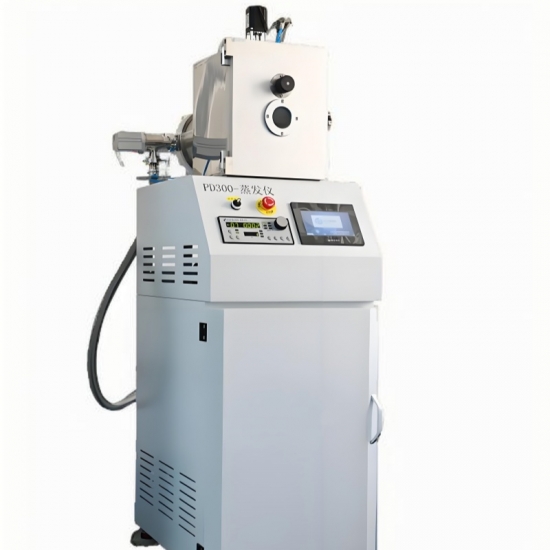
Lab Thin Film Evaporator: Precision Equipment for Laboratory-Scale Thin Film Processing
Overview
A Lab Thin Film Evaporator is a specialized laboratory-scale system designed for the efficient concentration, separation, and evaporation of liquids or materials with high thermal sensitivity. Utilizing the principle of thin film evaporation, the system spreads the feed material into a thin, continuously renewed layer on a heated surface, allowing rapid heat and mass transfer under controlled conditions. This technology is particularly important for research laboratories, pilot-scale testing, and process development in chemical, pharmaceutical, food, and materials science industries.
Lab thin film evaporators are valued for their ability to handle high-viscosity, heat-sensitive, or thermally unstable substances. The equipment’s compact design, low residence time, and precise temperature control enable researchers to perform experiments safely and efficiently while obtaining consistent and reproducible results.
Features
Lab thin film evaporators are equipped with several advanced features that ensure reliability, precision, and flexibility:
1. Compact and Modular Design
Laboratory-scale evaporators are designed to occupy minimal bench space while providing easy access to components for cleaning and maintenance. Modular construction allows adaptation for different experimental setups.
2. Rotating Wiper System
A mechanical wiper spreads the feed into a thin film on the heated surface, preventing fouling and improving heat transfer efficiency.
3. Precise Temperature Control
Integrated temperature sensors and digital controllers allow accurate regulation of heating surfaces, reducing thermal degradation of sensitive materials.
4. Vacuum Capability
Vacuum operation lowers the boiling point of liquids, making it suitable for temperature-sensitive compounds and enhancing solvent recovery efficiency.
5. High-Quality Materials
Contact surfaces are often made of stainless steel or corrosion-resistant alloys, ensuring chemical compatibility and durability.
6. Automated and Safety Features
Modern lab evaporators include interlocks, vacuum protection systems, and automated control functions to simplify operation and ensure user safety.
Process
The operation of a lab thin film evaporator involves several key steps:
1. Feed Preparation
The liquid to be concentrated or separated is pretreated to remove large particulates and ensure uniform flow.
2. Film Formation
The feed enters the evaporator and is spread into a thin, continuous layer by the rotating wiper system across the heated surface.
3. Evaporation under Controlled Conditions
The liquid is rapidly heated while under vacuum, allowing the volatile components to evaporate efficiently without overheating the bulk material.
4. Vapor Condensation
The vaporized components are condensed through a condenser system and collected separately for analysis or reuse.
5. Residue Collection
The concentrated residue moves along the heated surface and is collected at the outlet for further processing or analysis.
This process ensures minimal thermal degradation, high evaporation efficiency, and uniform concentration of the remaining material.
Physical Vapor Deposition
Applications
Lab thin film evaporators have a wide range of applications in laboratory research and pilot-scale testing:
* Chemical Research: Concentration of reactive chemicals, solvent recovery, and preparation of high-boiling-point compounds.
* Pharmaceutical Industry: Processing of active pharmaceutical ingredients (APIs), extraction of bioactive compounds, and solvent removal for drug formulation.
* Food and Beverage Research: Concentration of fruit juices, dairy extracts, and flavor compounds while maintaining nutritional and sensory qualities.
* Materials Science: Evaporation and concentration of polymer solutions, resins, or viscous materials for thin film studies.
* Environmental Studies: Treatment of laboratory-scale wastewater and recovery of valuable solvents or organics.
Advantages
Lab thin film evaporators offer several advantages over conventional evaporation equipment:
1. Efficient Heat Transfer: The thin film ensures maximum contact with the heated surface, accelerating evaporation.
2. Minimal Thermal Degradation: Low residence time and vacuum operation protect heat-sensitive compounds.
3. Ability to Handle Viscous Materials: Suitable for high-viscosity or sticky solutions that are difficult to evaporate conventionally.
4. Compact and Flexible: Laboratory-scale design allows easy installation and adaptability for multiple experimental conditions.
5. Reduced Fouling: Wiping mechanisms prevent material build-up on heated surfaces, reducing downtime and maintenance.
6. Precise Process Control: Digital controllers and vacuum systems enable accurate control over temperature, pressure, and evaporation rate.
Conclusion
The Lab Thin Film Evaporator is an essential tool for laboratories requiring precise and efficient evaporation of liquids or high-viscosity materials. Its combination of compact design, precise temperature and vacuum control, and efficient thin film formation enables researchers to concentrate, separate, or recover materials with minimal thermal degradation.
With applications spanning chemical research, pharmaceuticals, food science, materials science, and environmental studies, lab thin film evaporators provide a reliable platform for experimental research, pilot testing, and process development. By ensuring high reproducibility, efficiency, and safety, this equipment continues to play a vital role in advancing laboratory-scale evaporation and thin film processing technology.


 +86 13174506016
 Louis@lithmachine.com
 +86 18559646958
 18659217588
 English ▼


